Savoir-Faire
More than a century of craft, passed down through every creation
Savoir-Faire
For more than a century, the maison Charles has been shaped by the hands of the women and men who work metal in the tradition of French art bronzework. Founders, chasers, turners, assemblers, polishers and patinators: each carries a gesture learned from those who came before, passed on in the workshop through years of observation, practice and patience. Some of these techniques have left no written record. They live in the hands that practise them and the voices that pass them on: in knowing how to read the colour of heated metal, how to hear when a chasing tool has reached just the right depth, how to feel when a surface is ready. And binding these artisans together is the conviction that bronze, worked with knowledge and care, can stir the deepest emotion.
The Design & The Master Model
Before the material is worked, there is the drawing. Since 1908, the maison Charles has built a rare collection of more than 1,000 models, designed by members of the Charles family and by the creators with whom the maison has collaborated. This collection holds the maison’s…
Before the material is worked, there is the drawing. Since 1908, the maison Charles has built a rare collection of more than 1,000 models, designed by members of the Charles family and by the creators with whom the maison has collaborated. This collection holds the maison’s history and provides the starting point for new creations, which continue to enrich the catalogue each year. From an intention, a sketch or a project, the design office develops the piece on paper, working through its proportions, dimensions, ornamental details and technical requirements.
The model then takes shape from the drawing. Sculpted by hand by the artist or model maker - in wax, wood or plaster, depending on the complexity of the piece - it is the three-dimensional prototype for the first bronze casting. That first cast is brought to completion through precise chasing. It becomes piece no. 0: the master model, carefully preserved in the archives of the maison Charles and used as the reference for all future editions.

The Mould & The Foundry
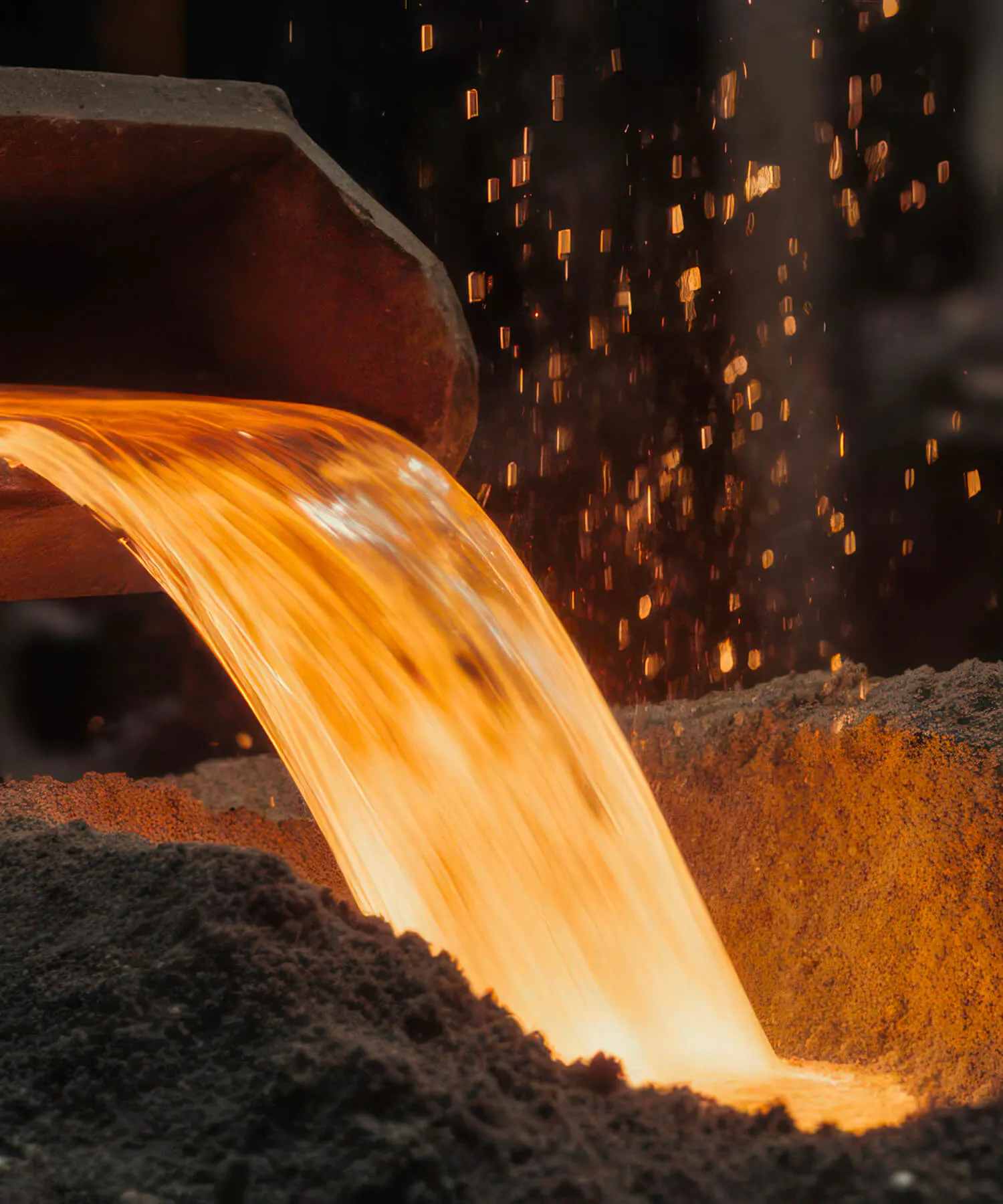
It all begins with fire. Bronze ingots are placed in a crucible and heated to more than 1,000 degrees. For sand casting, a traditional technique handed down through generations, the model is enclosed between two moulding frames packed with compacted sand. The model is then…
It all begins with fire. Bronze ingots are placed in a crucible and heated to more than 1,000 degrees. For sand casting, a traditional technique handed down through generations, the model is enclosed between two moulding frames packed with compacted sand. The model is then removed, leaving behind the exact impression of the piece. Molten metal is poured into the mould. For pieces that call for exceptional finesse, the maison Charles uses lost-wax casting, a remarkably precise technique also used in jewellery. As the metal cools, the mould is broken open to release the casting, preserving the integrity and singular character of each creation.
The Fettling & The Chasing
Fresh from the mould, the piece still bears the marks of casting: sprues, vents and excess metal. The chaser removes them one by one, carefully filing away the surplus before brightening and polishing the surfaces with abrasive cloth. This is known as fettling.
The chaser then…
Fresh from the mould, the piece still bears the marks of casting: sprues, vents and excess metal. The chaser removes them one by one, carefully filing away the surplus before brightening and polishing the surfaces with abrasive cloth. This is known as fettling.
The chaser then uses punches, tracers, hammers, matting tools and other chasing implements - many forged by the artisans themselves - to work each decorative detail in keeping with the creator’s intention. This is how the piece acquires its finesse, relief and character.
Here, the formal language of the maison Charles takes shape: the precision of a curve, the rightness of a leaf, the crisp line of a scroll. Meticulous and irreplaceable, chasing is the moment when raw metal becomes expressive. It is one of the living hearts of the workshop.

The Turning
Shaping on the Lathe
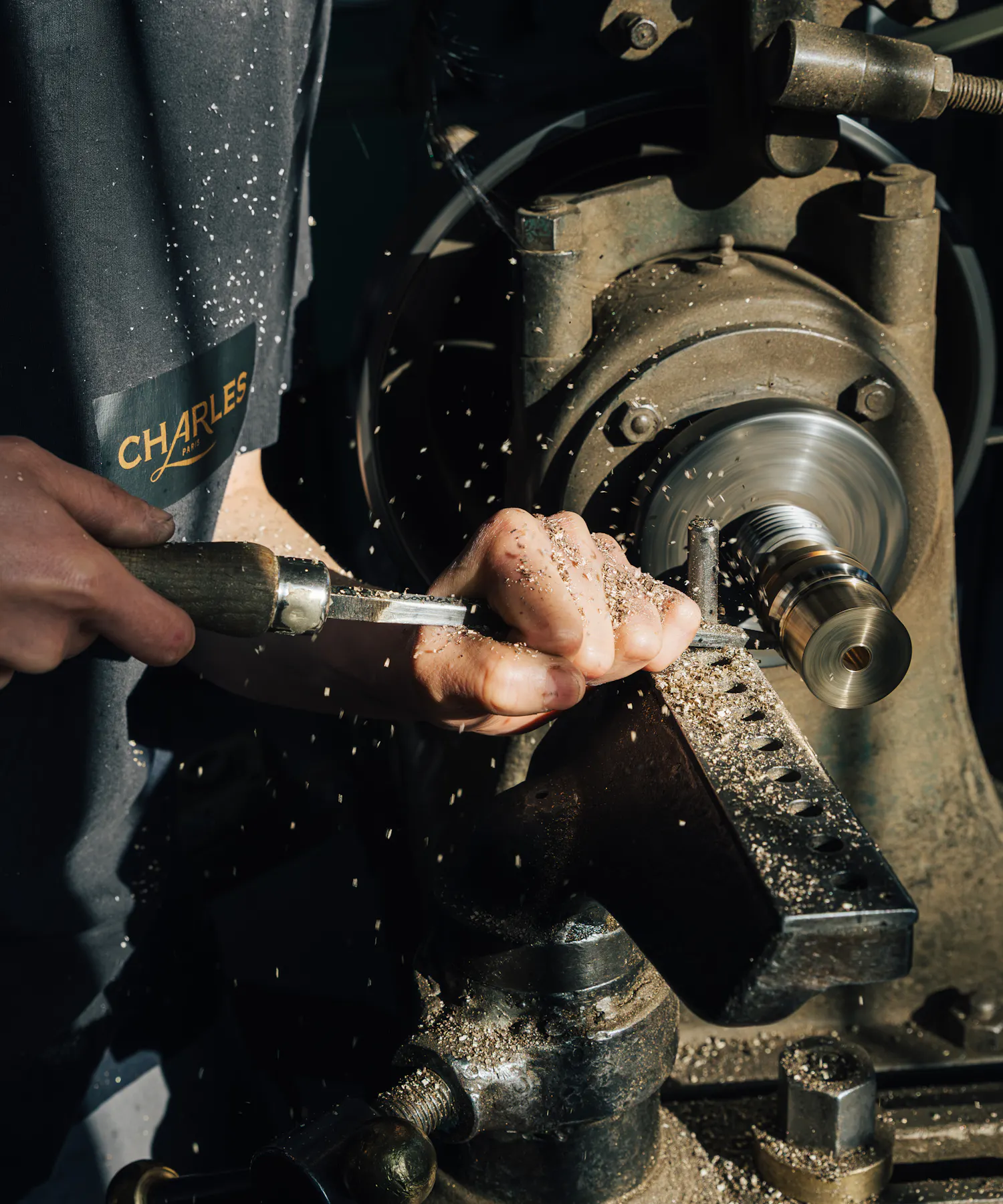
Cast cylindrical components are cleaned and placed on the lathe. The turner positions each one by hand, bringing it to its exact dimensions. Starting with a raw cylinder of cast brass, the turner can also shape a lamp neck, a ring or any technical component…
Shaping on the Lathe
Cast cylindrical components are cleaned and placed on the lathe. The turner positions each one by hand, bringing it to its exact dimensions. Starting with a raw cylinder of cast brass, the turner can also shape a lamp neck, a ring or any technical component suited to lathe work. Material is carefully removed until the desired form is achieved.
Ornamental Turning
Whether working on cylindrical components or round, flat pieces, the turner applies decorative patterns with an ornamental wheel. Beading, palm leaves and palmettes, reeding, interlacing and gadroons: these are among the families of motifs found in the royal and imperial styles. Known among turners as molettes des Rois, or “kings’ wheels”, these old tools have been handed down from bronze turner to bronze turner for centuries. They are no longer made, and every surviving wheel is irreplaceable. Pressed against the turning metal, the wheel leaves a continuous, finely worked pattern without a visible join, bringing the piece to life.
The Assembly
The assembler finds the simplest, strongest and most discreet way to bring the cast components together with the brass elements. Plates, tubes and shaped parts are fitted into the whole.
Some joints are made cold, with threaded, screwed or fitted connections. Others are made hot…
The assembler finds the simplest, strongest and most discreet way to bring the cast components together with the brass elements. Plates, tubes and shaped parts are fitted into the whole.
Some joints are made cold, with threaded, screwed or fitted connections. Others are made hot, using brazing techniques that join the components with molten silver while preserving the work of the chaser and the turner. Once the dry assembly has been checked, the piece is taken apart again. Each component is then treated separately in preparation for its decoration and finish.

The Polishing & The Finishes
In the spirit of the art foundries of the early twentieth century, every piece is worked as a sculpture.
Before any colour is applied, long hours of polishing smooth the bronze and brass. The interplay of bright and matt areas on the bronze, alongside satin and mirror-polished…
In the spirit of the art foundries of the early twentieth century, every piece is worked as a sculpture.
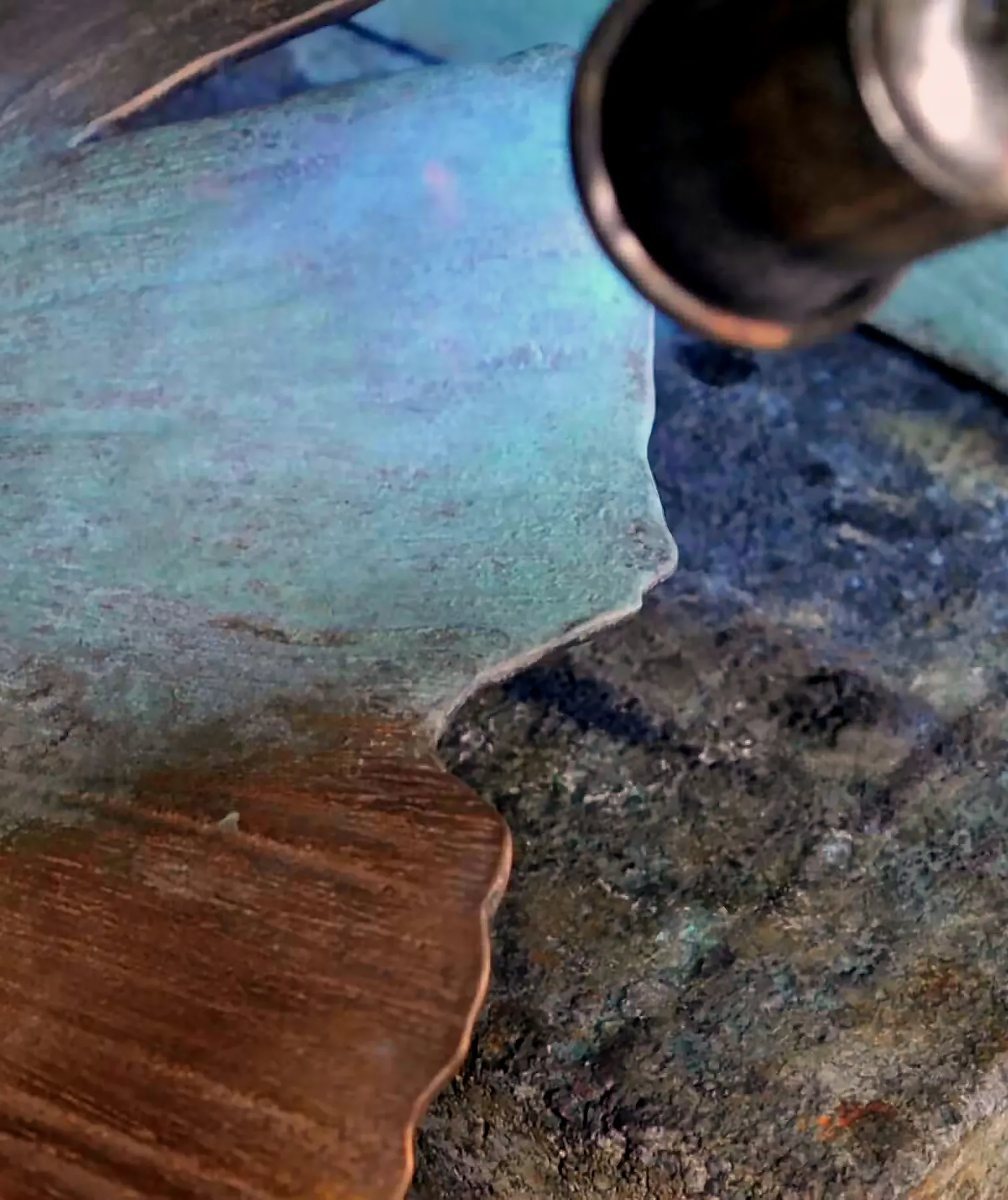
Before any colour is applied, long hours of polishing smooth the bronze and brass. The interplay of bright and matt areas on the bronze, alongside satin and mirror-polished brass, creates the piece’s play of light. Meticulous cleaning prepares the surfaces for their finish.
Each finish calls for a particular skill. From the brilliance of fine gold and nickel to polished and varnished metal; from the enhanced relief of medal patinas to the nuances of fire patinas, and the colours and gold leaf of the Angela lustre, the maison Charles commands one of the broadest repertoires in art bronzework, from the most traditional finishes to the most contemporary.
Once the finish has been chosen and applied, the piece is assembled for the final time, in a process known as remonture. It undergoes a final inspection, then is carefully packed with the maison Charles Certificate of Authenticity. It is ready to leave the workshop.
The Recycling
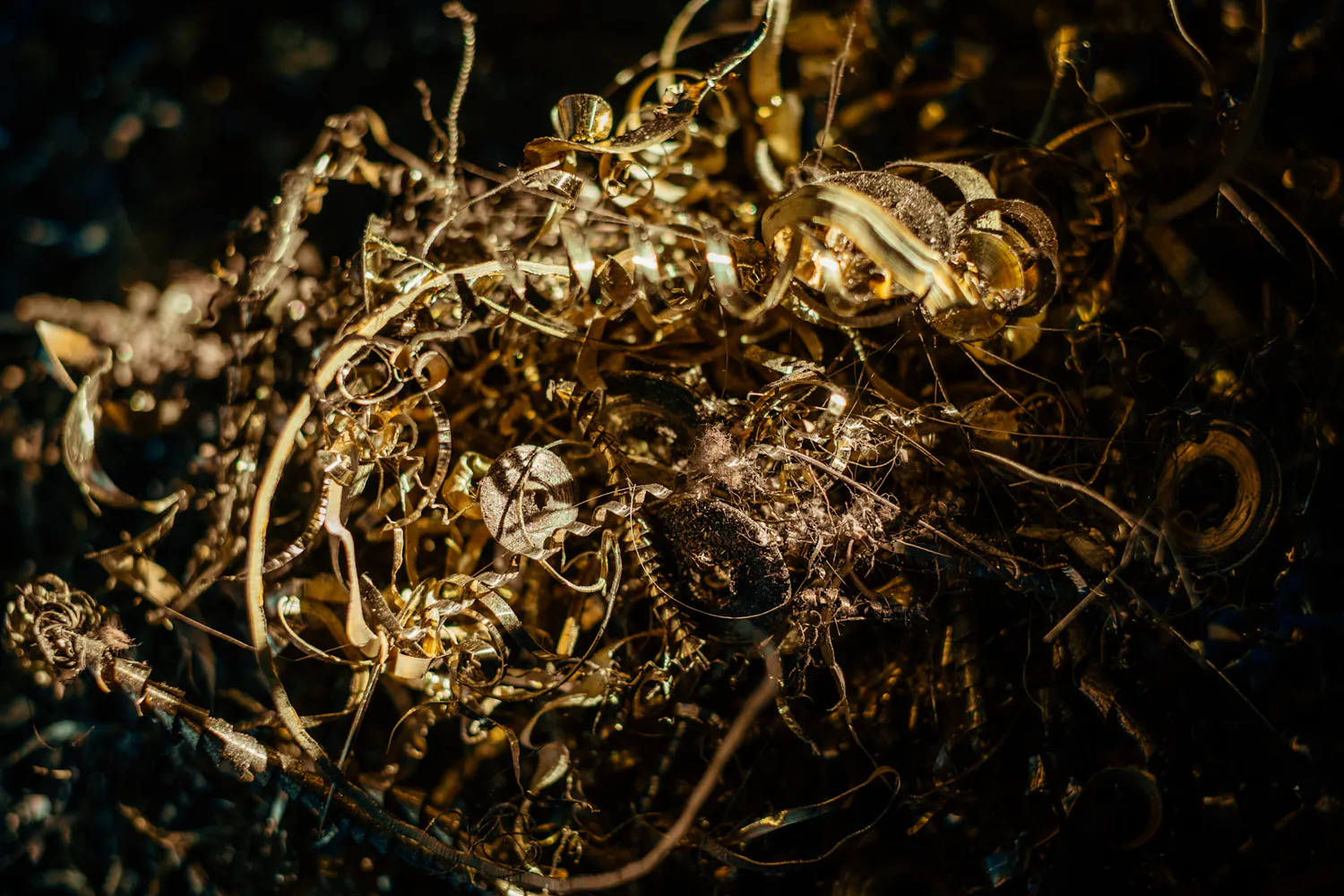
Nothing is wasted in a bronze workshop. Sprues and vents removed during fettling, shavings from the lathe, offcuts from assembly and pieces set aside during inspection all return to the crucible. Bronze can be remelted indefinitely without losing its qualities, making it one of…
Nothing is wasted in a bronze workshop. Sprues and vents removed during fettling, shavings from the lathe, offcuts from assembly and pieces set aside during inspection all return to the crucible. Bronze can be remelted indefinitely without losing its qualities, making it one of the few truly circular materials. Some of the metal cast in the workshops today contains copper extracted from the earth centuries ago. Prototyping wax is reused, and foundry sand is replenished from one pour to the next. This careful use of materials is not new; it is how foundries have worked since antiquity. Each piece from the maison Charles is made to last for generations.
{Discover More About Bronze Through the Ages}
To visit the atelier and showroom, make an appointment or discuss a bespoke project, the maison Charles team will be pleased to welcome you.