Bronze Through the Ages
Five thousand years of a material that endures
Bronze Through the Ages
Bronze was invented five thousand years ago. The gestures used to transform it at Charles today are the same as those practised by the founders of Mesopotamia, the bronze workers of Shang-dynasty China, and the craftsmen in the workshops of Donatello and Thomire. Across the world and through the millennia, bronze has borne gods and bells, cathedral doors and palace candelabra, sculptures, vases and coins. Since 1908, it has been the living heart of the maison Charles’s craftsmanship and creations.
The Origins
Around 3300 BCE, metalworkers in Mesopotamia began combining copper and tin. Over the centuries, the practice also took hold in workshops in the Indus Valley and the eastern Mediterranean. Modest metals in their raw state, copper and tin produce something exceptional when melted…
Around 3300 BCE, metalworkers in Mesopotamia began combining copper and tin. Over the centuries, the practice also took hold in workshops in the Indus Valley and the eastern Mediterranean. Modest metals in their raw state, copper and tin produce something exceptional when melted together at high temperature: a material hard enough to hold an edge, fluid enough when molten to take on the finest relief of a mould, and durable enough to outlast the civilisations that shaped it.
An entire era, the Bronze Age, takes its name from this fundamental discovery. The word bronze is thought to derive from Brundisium, present-day Brindisi in Italy, an ancient city renowned for its alloys and bronze mirrors. Bronze predates iron by nearly fifteen centuries.
The earliest artefacts to have come down to us from antiquity were often ceremonial before they were useful: bracelets, libation vessels, ritual axes, polished mirrors and votive figures. The bracelets shown here were buried around 1300 BCE in a vessel discovered at Domloup, in Ille-et-Vilaine. From the beginning, bronze was the material chosen for what a civilisation wished to preserve for future generations: its gods, its history, its memory.

The Anatomy of an Alloy
Bronze is conventionally composed of around ninety per cent copper and ten per cent tin. Their union creates a remarkable strengthening effect at the microscopic level: the larger tin atoms impede the movement of the copper’s atomic planes. The resulting alloy is far harder and…
Bronze is conventionally composed of around ninety per cent copper and ten per cent tin. Their union creates a remarkable strengthening effect at the microscopic level: the larger tin atoms impede the movement of the copper’s atomic planes. The resulting alloy is far harder and more durable than either metal alone, and can take a sharper edge. Exceptionally fluid when molten, bronze flows into the smallest recesses of a mould, capturing fine details, textures and irregularities, even fingerprints and the texture of skin.
Every adjustment to an alloy’s proportions changes the metal’s behaviour: its hardness, resonance, capacity to retain detail, and response to air and time. Some bronze compositions have remarkable acoustic qualities. When struck, bronze rings with exceptional clarity and sustain. For centuries, it has been the preferred metal for casting bells.
From sculpture to precision instruments, and across fields as varied as horology, aerospace and underwater engineering, bronze lends itself to many different uses while retaining the ability to combine strength, precision and transformation.

A Living Material
Bronze is a living material: its surface evolves in contact with air and time. Left to itself, it oxidises, darkens, takes on green tones and changes. In the hands of an artisan, it can be guided through a wide range of finishes: the warm, deep brown of a medal patina; the pale…
Bronze is a living material: its surface evolves in contact with air and time. Left to itself, it oxidises, darkens, takes on green tones and changes. In the hands of an artisan, it can be guided through a wide range of finishes: the warm, deep brown of a medal patina; the pale gold of mercury gilding; verdigris; the near-black of a burnished finish; or the soft lustre of a silvered surface.
Patination is both a chemical process and an act of intention. It results from the metal’s reaction to the solutions applied to it, to heat and to time. The artisan guides each stage, reading the colour of heated metal, listening to the material and sensing when the surface is ready. Once it has left the workshop, bronze remains in dialogue with its surroundings, responding to them slowly over the decades.

A Material That Endures
Bronze is one of the most fully recyclable materials there is. It can be melted down and cast again and again without losing its qualities. The practice dates back to the Bronze Age: copper and tin, scarce in Europe, were too valuable to be discarded. Worn or broken objects went…
Bronze is one of the most fully recyclable materials there is. It can be melted down and cast again and again without losing its qualities. The practice dates back to the Bronze Age: copper and tin, scarce in Europe, were too valuable to be discarded. Worn or broken objects went back into the crucible. Over the centuries, the metal from statues, coins, bells and cannons was melted down, reworked and transformed. Some contemporary bronze objects still contain copper atoms extracted from the earth centuries ago, passed from one casting to the next and from one object to another.
In the Charles workshops, bronze is worked one piece at a time, through the skill and rhythm of the artisan’s hand. Each piece is made to last, not just for a season or a few decades, but for generations. Its weight, its warmth, the way it catches the light, the place it occupies in a room: these qualities are timeless. In an economy geared towards the ephemeral, bronze remains a material to be passed down. To choose bronze today is to choose the long term.

Techniques Inherited from Antiquity
Some of the techniques used in art bronzework today are older than bronze itself.
Lost-wax casting is nearly six thousand years old. Artisans used the process to shape copper and gold long before bronze was made. The jewellery from the necropolis of Varna, in Bulgaria, dates to…
Some of the techniques used in art bronzework today are older than bronze itself.
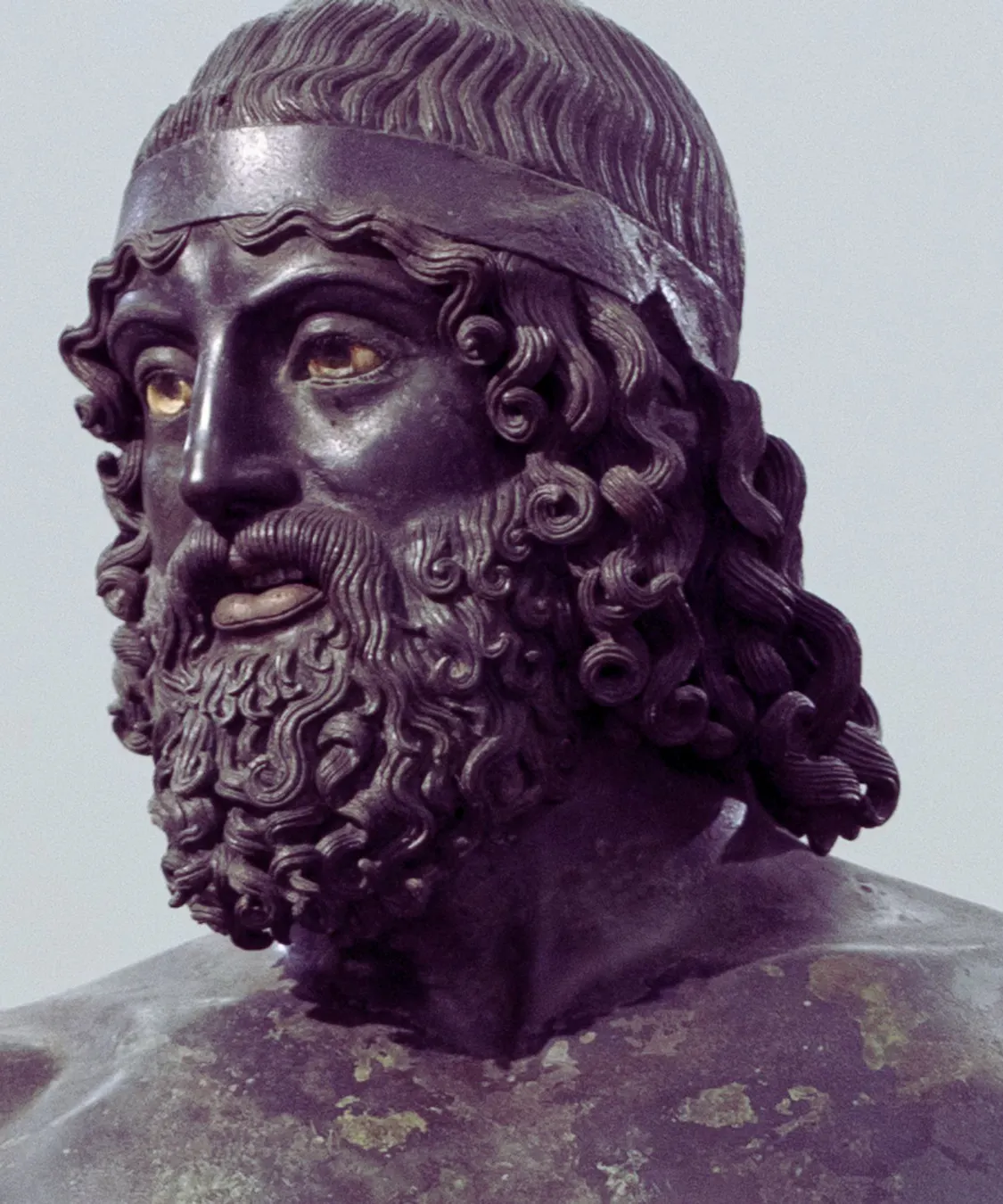
Lost-wax casting is nearly six thousand years old. Artisans used the process to shape copper and gold long before bronze was made. The jewellery from the necropolis of Varna, in Bulgaria, dates to the fifth millennium BCE; a copper amulet discovered at Mehrgarh, in the Indus Valley, dates to around 4000 BCE. Then, around the sixth century BCE, Greek bronze workers brought lost-wax casting to a new scale. By shaping a thin layer of wax around a clay core, they were able to cast hollow statues on a life-size scale. The Riace Bronzes, shown here, are among the most striking evidence of this development.
Patination has roots just as deep. As early as Egypt’s Middle Kingdom, between the twenty-first and eighteenth centuries BCE, workshops produced a material known as “black copper” (hmty-km): an alloy enriched with a little gold or silver, its surface treated with copper salts and heat until it took on a deep black colour, against which precious inlays stood out. Four thousand years later, this remains the principle behind chemical patination.
The lathe, too, is among the artisan’s oldest tools. It is attested in ancient Egypt from the thirteenth century BCE and entered the bronze worker’s workshop during the early Iron Age, around 800 BCE.
Bronze in the History of Art
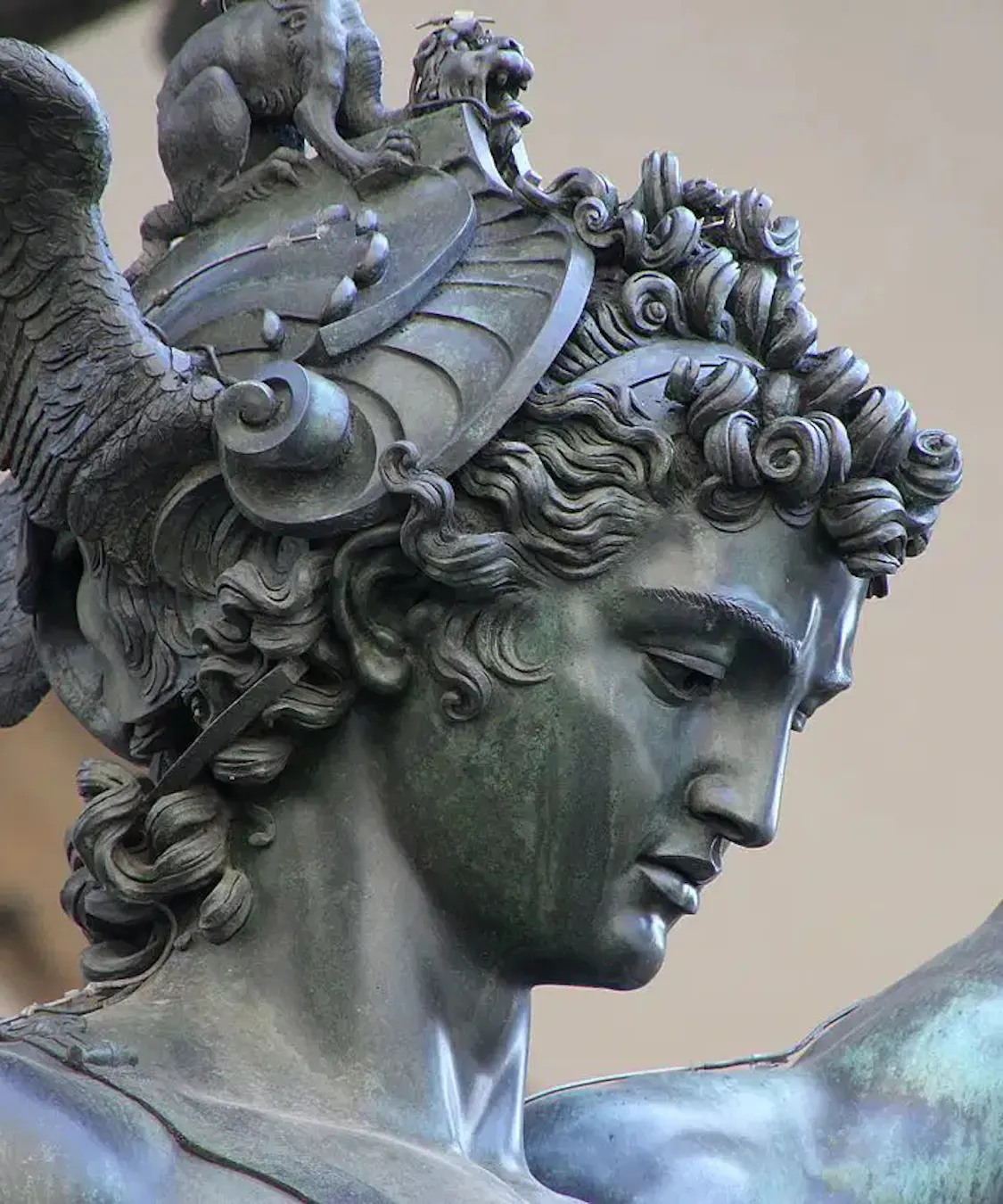
Few materials have served so many forms of human creativity. Bronze gave Greek and Roman sculpture its standing figures and equestrian monuments; it gave the Middle Ages their doors and bells; and it gave the Italian Renaissance Donatello’s David and Cellini’s Perseus (pictured…
Few materials have served so many forms of human creativity. Bronze gave Greek and Roman sculpture its standing figures and equestrian monuments; it gave the Middle Ages their doors and bells; and it gave the Italian Renaissance Donatello’s David and Cellini’s Perseus (pictured here). In eighteenth-century France, the great ornamental bronze makers - Caffieri, Gouthière and Thomire - raised decorative bronze to a degree of refinement that remains a benchmark today. Working in close dialogue with cabinetmakers and architects, they created furniture mounts, candelabra and clocks that helped define the French interior. In the nineteenth century, Barye and the animal sculptors turned to bronze to depict the animal kingdom. The twentieth century brought Rodin’s hand, Brancusi’s abstraction, Giacometti’s solitary figures and Louise Bourgeois’s monumental vulnerability. From temple to drawing room, from drawing room to museum, bronze has traversed every scale and register of art history.
At Charles, bronze served the imaginations of Jean, Jacques, Chrystiane and Laurent throughout the twentieth century.
That history continues to unfold in our workshops, with every piece created there.