The History of the maison Charles
Art bronze craftsmanship for more than 120 years
The History of the maison Charles
For more than a century, Charles has shaped bronze, time and light with a human touch and a sense of poetry. Just outside Paris, in the hands of its artisans, bronze melts, breathes, sings and cools; it yields to carving, engraving, polishing and patination. The maison works bronze with the intensity others bring to gold or precious stone, guided by an exacting attention to detail and a formal discipline in which the gesture takes precedence over the effect. To move and to amaze: this is the maison’s promise, along with the creation of art-bronze lighting and collectible objects that pass through time without diminishing it.
The Founding of the Maison
In 1908, Ernest Charles, born in 1872, took over the Ullmann art-bronze workshop on rue de Turenne in Paris and gave it his name.
The maison Charles first specialised in reproducing historic lighting: chandeliers, wall lights and lamps from the seventeenth and eighteenth…
In 1908, Ernest Charles, born in 1872, took over the Ullmann art-bronze workshop on rue de Turenne in Paris and gave it his name.
The maison Charles first specialised in reproducing historic lighting: chandeliers, wall lights and lamps from the seventeenth and eighteenth centuries. From the outset, it belonged to the tradition of the great Parisian bronze makers.
Four generations followed at its helm. Ernest’s son, Émile-Albert Charles, took over in the 1920s and led the maison through the war. In 1959, his sons Jacques and Jean gave it what became known as the “Charles style”: the maison moved from reproducing historic designs to issuing signed models, and bronze took the form of a pineapple, a lotus or an ear of corn. In the 1960s, Jacques introduced the Inox collection, with the Orgues lamp becoming one of the maison’s icons. Chrystiane Charles, meanwhile, developed the idea of the sculptural lamp, in which the form itself carries the light. In 1982, her son Laurent, an architect, joined the maison and expanded its repertoire with Art Deco-inspired designs of his own.
A longstanding partner to designers and interior architects, Charles has illuminated hundreds of palaces, embassies, grand hotels and residences around the world, from Paris to New York. Today, each piece is still made in the maison’s workshops, using the same skills and techniques practised in 1908. The Beaufour-Lévy family, which took over the maison in 2019, continues its story. The timeline that follows traces its defining moments.

Jean & Jacques Charles
Ernest’s son, Émile-Albert Charles, was joined by his own sons: Jacques, trained in interior architecture at the École des Arts appliqués, and Jean, who graduated top of his class at the École Boulle in wood sculpture and furniture-making before continuing his studies in the…
Ernest’s son, Émile-Albert Charles, was joined by his own sons: Jacques, trained in interior architecture at the École des Arts appliqués, and Jean, who graduated top of his class at the École Boulle in wood sculpture and furniture-making before continuing his studies in the sculpture studios of the Beaux-Arts and working in Scandinavian furniture factories.
Together, they created what came to be known as the “Charles style”. The maison turned from reproducing historic lighting to issuing signed designs, in which a natural form, understood in the round and realised in chased bronze, became a lamp. Ananas, Épi de Maïs, Pomme de Pin, Lotus and Vase Médicis all date from these years. In 1960, the family took over the Fargette house and moved to 16 rue du Parc-Royal in the Marais.

Stainless Steel and the Making of the Orgues Lamp
In 1965, Jacques Charles designed the Orgues lamp. Like the rest of the Charles family, he was passionate about both classical music and jazz. The organ inspired the design, as did the period’s fascination with modular forms and repetition, a sensibility shared that same year by…
In 1965, Jacques Charles designed the Orgues lamp. Like the rest of the Charles family, he was passionate about both classical music and jazz. The organ inspired the design, as did the period’s fascination with modular forms and repetition, a sensibility shared that same year by Op Art and Minimalist sculpture.
After the leaf and the fruit came the line: geometry entered the maison’s repertoire. Orgues opened the way for a major stainless-steel collection, at a time when steel was moving from the factory into the home, in the work of designers from Maria Pergay to Michel Boyer. Freed from its lampshade, the lamp stands alone as a sculpture. Orgues soon became one of the maison Charles’s signature designs. It was made as a table lamp, floor lamp, wall light and pendant.

Charles Furniture and the Jonc Coffee Table
By the mid-1960s, the maison Charles was extending into furniture the forms it had developed for its lighting. Jacques Charles designed the Jonc coffee table from the lamp of the same name. The motif moves from one piece to the other: the lamp’s elongated curves reappear in the…
By the mid-1960s, the maison Charles was extending into furniture the forms it had developed for its lighting. Jacques Charles designed the Jonc coffee table from the lamp of the same name. The motif moves from one piece to the other: the lamp’s elongated curves reappear in the table’s legs, repeated in a sequence of arches.
The structure remains visible beneath the glass top. The Jonc table translates the lamp’s design to a different scale and purpose, while retaining its botanical silhouette.

Chrystiane Charles, the Botanical Sculptor
When her husband Jean died prematurely in 1971, Chrystiane Charles took over the maison’s artistic direction. A sculptor and gold medallist of the Beaux-Arts, she had joined the maison in 1959. She now created a collection of her own.
Taking up the family legacy, she developed a…
When her husband Jean died prematurely in 1971, Chrystiane Charles took over the maison’s artistic direction. A sculptor and gold medallist of the Beaux-Arts, she had joined the maison in 1959. She now created a collection of her own.
Taking up the family legacy, she developed a collection of sculptural lights, each signed and numbered, contemporary in expression and inspired by nature: Amaryllis, Alizée, Orchidée, Tulipes...
In 1978, her Feuille d’Eau lamp won the Golden Lamp Award for Creation at the Paris International Lighting Fair. Her Orchidée received the same distinction in 1981. In 1997, Chrystiane Charles was appointed a Chevalier of the National Order of Merit. She died on 8 December 2013.

Laurent Charles
Laurent Charles, the son of Jean and Chrystiane, was born in 1953. A brilliant student, he trained in architecture at the Beaux-Arts. He grew up close to the workshop, in a home where making things was part of everyday life. He joined the maison in 1982 and worked alongside his…
Laurent Charles, the son of Jean and Chrystiane, was born in 1953. A brilliant student, he trained in architecture at the Beaux-Arts. He grew up close to the workshop, in a home where making things was part of everyday life. He joined the maison in 1982 and worked alongside his mother for more than twenty years.
To Chrystiane’s sculptural lamps, he brought a geometric, graphic line shaped by his particular affection for ArtDeco: Athos, Archéo, Ténéré, Quasar, Linéa, Lérida… Here, light is built rather than modelled, in planes, edges and tiers. Under his direction, the maison opened its catalogue to artists, including Arman in 1986. In 1992, his father Jean’s Stockholm lamp received a special posthumous mention at the Golden Lamp Award for Creation. Laurent Charles died suddenly in 2011.

Arman et la lampe Liberté
At Charles, every piece is conceived as a sculpture, brought to life by light; the world of art has always felt at home in the maison. In 1986, that dialogue took shape in a design by Arman. A central figure of Nouveau Réalisme, alongside Yves Klein and César, he created…
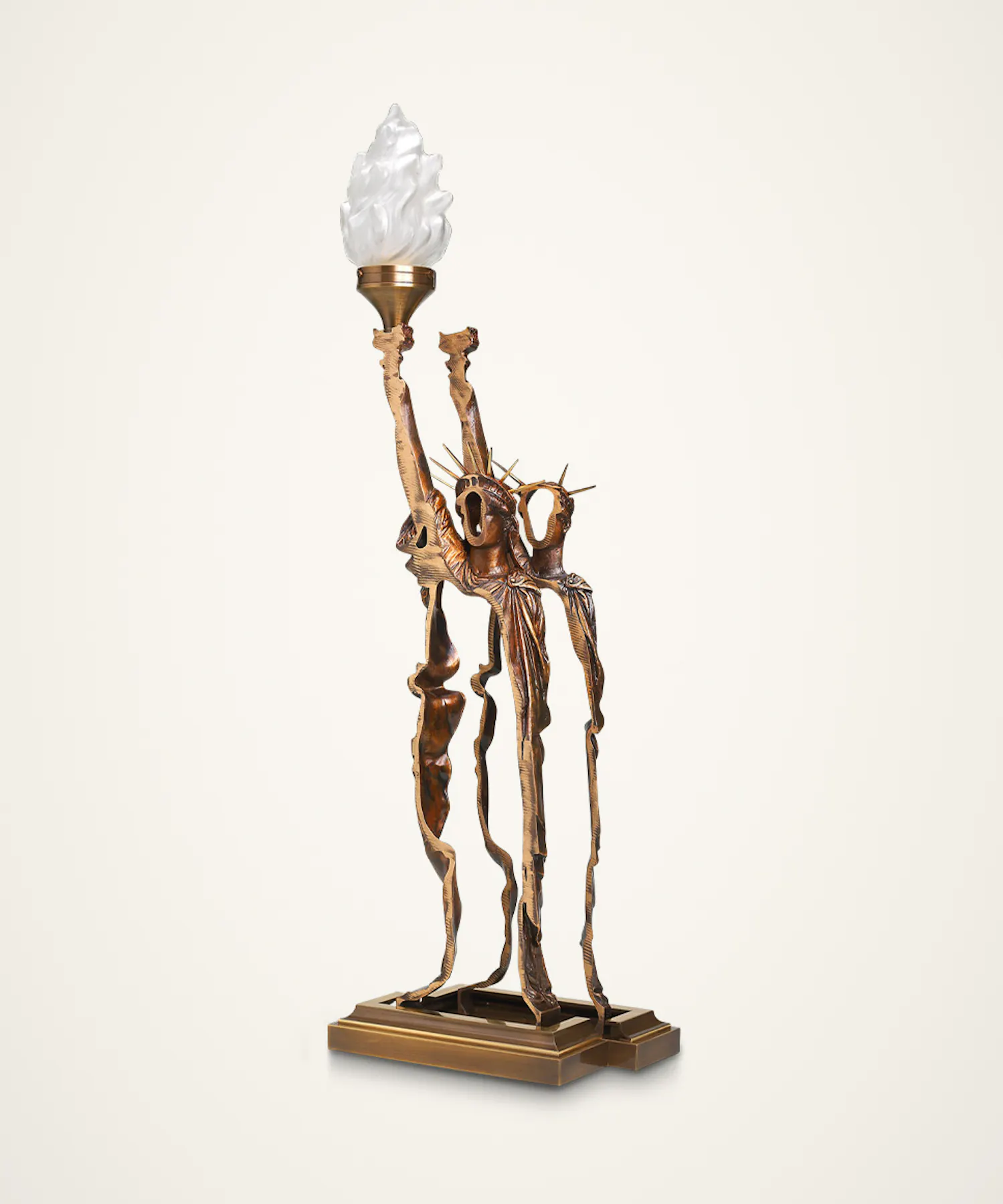
At Charles, every piece is conceived as a sculpture, brought to life by light; the world of art has always felt at home in the maison. In 1986, that dialogue took shape in a design by Arman. A central figure of Nouveau Réalisme, alongside Yves Klein and César, he created the Liberté lamp for Charles.
The lamp grew out of his Slices of Liberty series, begun in 1985 for the centenary of the Statue of Liberty. For two decades, Arman had been cutting into violins, bronzes and everyday objects. Now he sliced through New York’s defining symbol and reassembled it in offset sections. Designed for Chrystiane Charles, the sculpture became a light: its bronze sections part and meet again, while a flame of frosted glass crowns the torch.
The Ginkgo Lamp Creation
In 1990, Chrystiane Charles created the Ginkgo lamp. Her inspiration came from her travels in Asia and from the ginkgo itself: the oldest living tree species on earth, it predates flowers, bees and dinosaurs and has remained unchanged for 270 million years.
In this extraordinary…
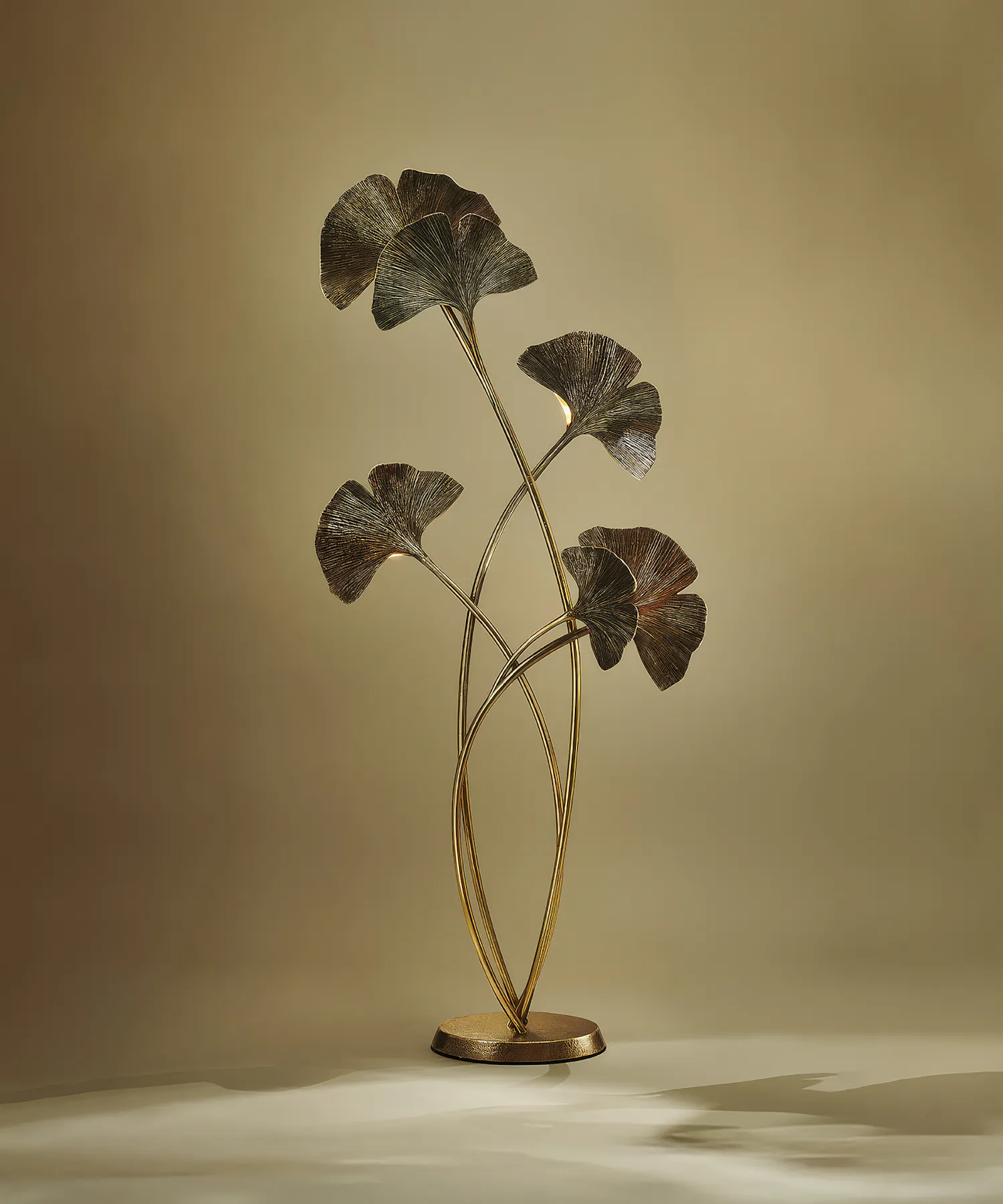
In 1990, Chrystiane Charles created the Ginkgo lamp. Her inspiration came from her travels in Asia and from the ginkgo itself: the oldest living tree species on earth, it predates flowers, bees and dinosaurs and has remained unchanged for 270 million years.
In this extraordinary tree, she recognised qualities it shared with bronze: both precede us and outlive us. Ginkgo became the botanical emblem of Charles and one of the clearest expressions of the maison’s craft: a leaf interpreted in the round, chased vein by vein, made to carry the light. The design is available as a table lamp, wall light, pendant and floor lamp.
Michael Wagner Takes Over the Maison
In 2001, Michael Wagner took over the maison Charles. His family’s connection to the maison went back years. He grew up with the Aloès lamp, which stood like something magical on his father’s grand piano. His mother, Katrin Hagenmayer, had two great loves: Hermès and Charles. She…
In 2001, Michael Wagner took over the maison Charles. His family’s connection to the maison went back years. He grew up with the Aloès lamp, which stood like something magical on his father’s grand piano. His mother, Katrin Hagenmayer, had two great loves: Hermès and Charles. She had collected Charles pieces for years and was a close friend of Chrystiane. When the Charles family decided to hand over the maison, they naturally entrusted it to her and her son.
Michael Wagner then moved Charles to Saint-Denis, into the former Christofle workshops. For nearly twenty years, he led the maison and designed several pieces for the catalogue, including Zurna, Utah and Moon Slice.

Philippe Parent, Artistic Director
In 2006, Philippe Parent was appointed artistic director of the maison. His connection with Charles went back much further: at one of the first lighting fairs, in the late 1970s, he met Chrystiane and Laurent. They hit it off at once, and their paths would remain closely linked…
In 2006, Philippe Parent was appointed artistic director of the maison. His connection with Charles went back much further: at one of the first lighting fairs, in the late 1970s, he met Chrystiane and Laurent. They hit it off at once, and their paths would remain closely linked. Born in 1950, Parent trained at the École Boulle before becoming an interior architect and designer. He had worked for Audrey Hepburn and Fiona von Thyssen before founding his Paris practice in 1978, where he designed furniture and interiors with a distinctly modernist rigour. By the time Michael Wagner invited him to take on the artistic direction, he had known the maison for nearly thirty years.
For Charles, he designed around thirty models, beginning with the Meter collection in 2006, followed by lamps such as Squarelight, Onstage, Roshaan and Phalène. His travels informed his work, India in particular: models including Sanchi, Rasa and Kuta take their names from places there. His design language is precise, built from planes and lines. He brings bronze into dialogue with alabaster, marble and wood, giving each lamp the poise of an architectural object.

The Centenary and the Creation of the Bubbles Chandelier
In 2008, the maison Charles celebrated its centenary. A century after Ernest Charles took over the workshop on rue de Turenne, Luc Gensollen designed the Bubbles pendant to mark the occasion. Clusters of eglomisé glass spheres, silvered by hand by master glassmaker Stéphane…
In 2008, the maison Charles celebrated its centenary. A century after Ernest Charles took over the workshop on rue de Turenne, Luc Gensollen designed the Bubbles pendant to mark the occasion. Clusters of eglomisé glass spheres, silvered by hand by master glassmaker Stéphane Rivoal, gather around a central hub to form a constellation. The lights nestle among them, reflected and multiplied by each sphere. Bronze and glass, two crafts with millennia of history, come together in a design also made as a floor lamp and a wall light.

The Creation of the Angela Chandelier
Created in 2011 for the Hôtel Burgundy in Paris, the Angela pendant grew out of a process developed within the workshop itself. Jean-Manuel Freitas, master chaser and head of the maison’s workshop, conceived its crown of leaves. To retain the design’s generous scale without the…
Created in 2011 for the Hôtel Burgundy in Paris, the Angela pendant grew out of a process developed within the workshop itself. Jean-Manuel Freitas, master chaser and head of the maison’s workshop, conceived its crown of leaves. To retain the design’s generous scale without the weight of bronze, he chose resin. Each leaf is shaped and painted by hand, with a silvered patina on the front and a gilded reverse.
The colours of Angela were developed exclusively for the maison Charles. Enriched with mineral pigments, they preserve the leaves’ lustre over time. Some finishes also feature gold or silver leaf, applied by hand, one leaf at a time. The design is available in several versions.
Olivia Putman X the maison Charles
In 2012, Olivia Putman designed the Jour de Fête lighting series for the maison Charles. An art historian by training and a landscape designer by profession, she had taken over the direction of Studio Putman, founded by her mother Andrée, in 2007. Jour de Fête brings together two…
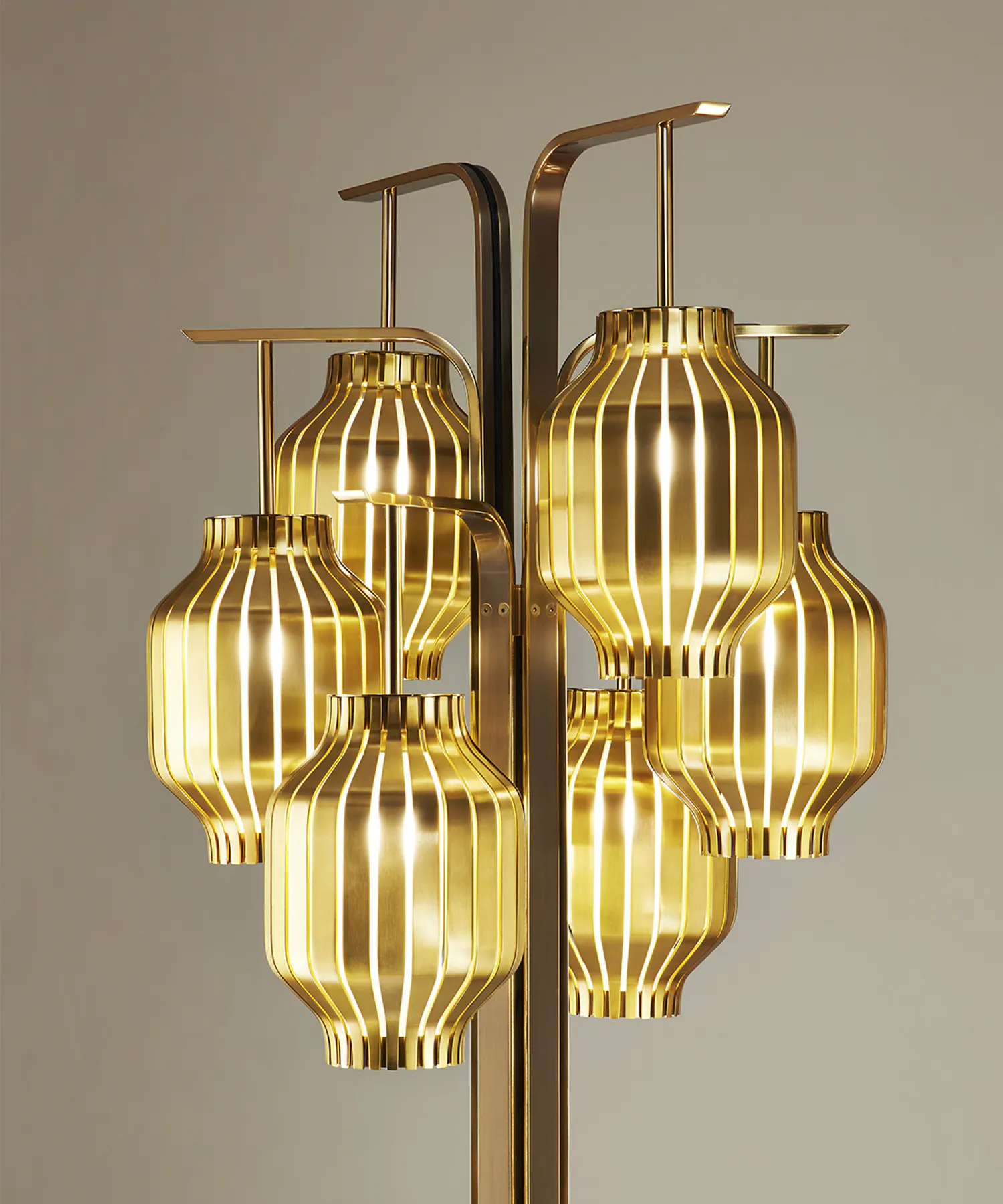
In 2012, Olivia Putman designed the Jour de Fête lighting series for the maison Charles. An art historian by training and a landscape designer by profession, she had taken over the direction of Studio Putman, founded by her mother Andrée, in 2007. Jour de Fête brings together two worlds: the Art Deco lamp and the Chinese lantern. The interiors of Wong Kar-wai’s In the Mood for Love were among its inspirations. Bronze gives the collection a soft, festive glow. In 2014, the piece was shown in Hong Kong in the exhibition Andrée Putman, Ambassador of Style, alongside works that carried forward her mother’s legacy, a year after Andrée’s death.
Félix Agostini joins the Charles catalogue
A dancer at the Châtelet at twenty, then an advertising illustrator at Draeger, Félix Agostini opened his studio on rue Vercingétorix in Montparnasse. From 1955 onwards, he modelled his best-known works directly in plaster, using a spatula, knife or spoon. He never reworked the…
A dancer at the Châtelet at twenty, then an advertising illustrator at Draeger, Félix Agostini opened his studio on rue Vercingétorix in Montparnasse. From 1955 onwards, he modelled his best-known works directly in plaster, using a spatula, knife or spoon. He never reworked the gesture: the first was the right one. Birds, stylised women, comets; sconces, floor lamps, consoles and coffee tables… His body of work comprises nearly two hundred pieces, including Échassier, a tribute to the Giacometti brothers. He showed his work in his shop on rue de Penthièvre and, each summer, in Mougins, where he built a discerning clientele. He died in 1980.
For more than thirty years, his daughter, Dominique Kerguenne Agostini, watched over his work. She inspected every piece offered for sale and turned down proposals to publish editions. In 2011, Michael Wagner came across Agostini’s creations at antique dealers. He met Dominique and invited her to the Charles workshops.
A year and a half later, in 2013, their collaboration took shape: Dominique entrusted the maison Charles with producing an initial selection of around twenty of her father’s works. Made to order from the original moulds, each piece faithfully follows the model and is signed and numbered. Dominique designs the lampshades. Félix Agostini’s work thus entered the maison’s catalogue.

Charles Releases Twenty-Two New Félix Agostini Bronzes
Three years after the first collection, the maison Charles released twenty-two new bronzes by Félix Agostini, selected with his daughter, Dominique Kerguenne Agostini, from a body of nearly two hundred works. The mutual respect that marked their first encounters had grown into a…
Three years after the first collection, the maison Charles released twenty-two new bronzes by Félix Agostini, selected with his daughter, Dominique Kerguenne Agostini, from a body of nearly two hundred works. The mutual respect that marked their first encounters had grown into a close and exacting friendship, which guided the selection. The accompanying monograph also brought to light four works by Denise Pietra Corbara (1943–1990), the sculptor’s companion and pupil, which had never before been published.
Raphael Navot X the maison Charles
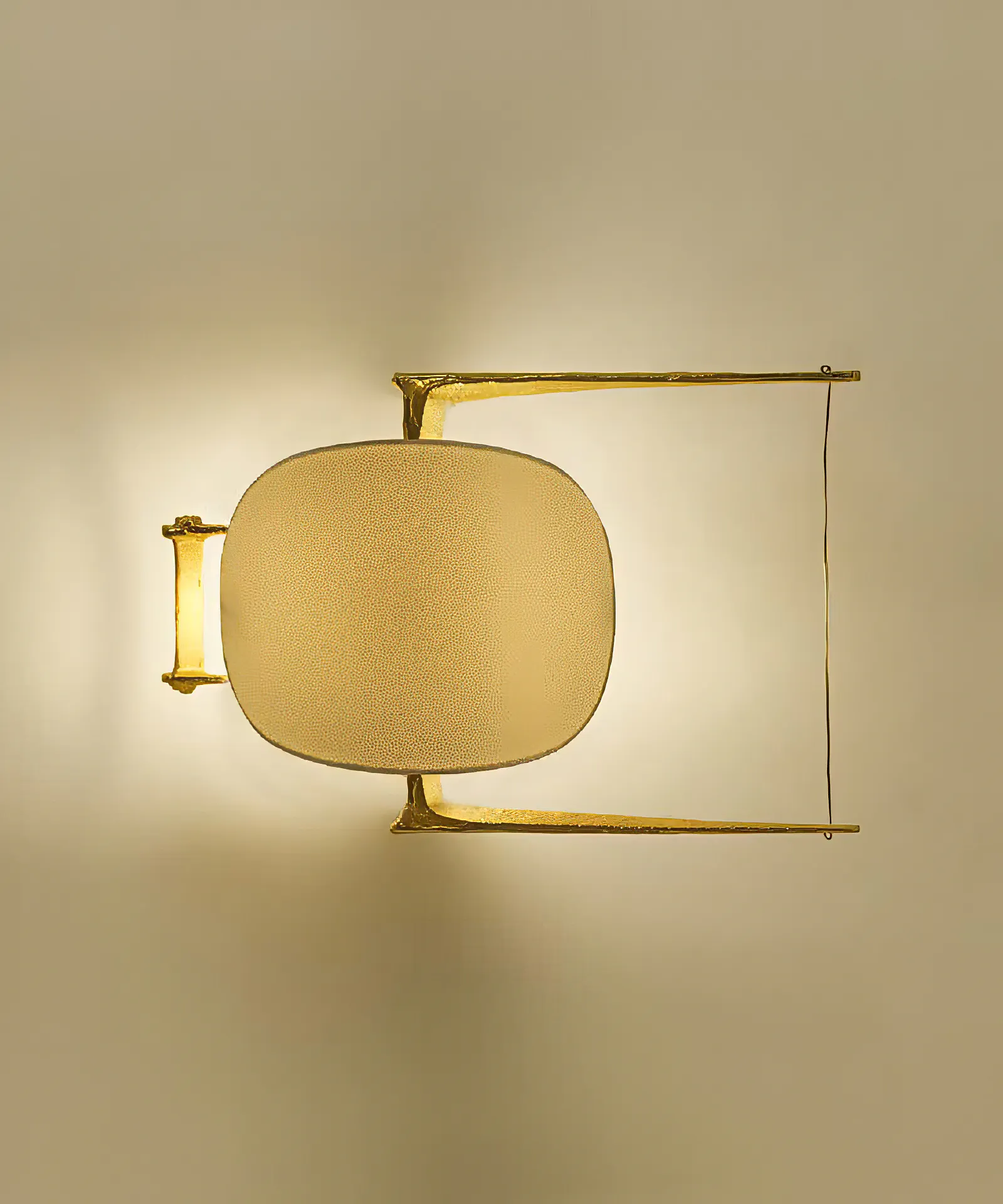
In 2017, Raphael Navot designed several lights and objects for the maison Charles, including the sculptural Animal bench, the Shine and Shine Back to Back lamps, and Landscape, a lamp produced in a limited edition of eight. Its drawing is shown here.

The Beaufour-Lévy Family Takes Over the maison Charles
In June 2019, the Beaufour-Lévy family, already committed to the fine crafts and exceptional craftsmanship, took over the maison Charles. Michael Wagner, who wished to pass it on, had met Nicolas Beaufour and his daughter Praxéda the previous year; he chose to entrust it to them…
In June 2019, the Beaufour-Lévy family, already committed to the fine crafts and exceptional craftsmanship, took over the maison Charles. Michael Wagner, who wished to pass it on, had met Nicolas Beaufour and his daughter Praxéda the previous year; he chose to entrust it to them. They now lead the maison.
On 1 July 2021, the workshops moved to Aubervilliers, into the former match factory. Founded in 1867, the site is recognised by its U-shaped brick buildings and its forty-five-metre chimney, which is listed as a historic monument. It produced matches until 1962, then housed archives, before the city began its restoration with the aim of welcoming craft workshops. In 2015, students from the Institut national du patrimoine and three Chanel maisons d’art moved in: Lognon, pleater; Massaro, shoemaker; and Maison Michel, hatmaker. When they later moved to the 19M, Charles took over their workshops.

Pierre-Yves Rochon X the maison Charles
For the maison Charles, Pierre-Yves Rochon first designed a lamp entitled Collectionneur, presented at AD Intérieurs in 2019.
Four years later, in 2023, the original design grew into a collection of three models - Moderne, Classique and Colonne - each exploring a different…
For the maison Charles, Pierre-Yves Rochon first designed a lamp entitled Collectionneur, presented at AD Intérieurs in 2019.
Four years later, in 2023, the original design grew into a collection of three models - Moderne, Classique and Colonne - each exploring a different relationship between decorative heritage and contemporary lines. Alabaster forms the luminous body; brass and fabric shape the shades and details. On each lamp, the body and shade can be lit independently, allowing the light to shift with the desired atmosphere.
Pierre-Yves Rochon avoids fixed styles and passing trends. For him, an interior finds its balance through a dialogue between the place, its history and the people who inhabit it. The Collectionneur collection brings this approach to the scale of a lamp: three interpretations of a single design, each conceived so that light becomes part of the object itself.

Félix Agostini: his complete body of work entrusted to the maison Charles
In 2024, recognising the maison Charles’s authority and at the encouragement of the Beaufour-Lévy family, Dominique Kerguenne Agostini entrusted it with the exclusive rights to publish her father’s complete body of work. The maison can now produce editions across the entire…
In 2024, recognising the maison Charles’s authority and at the encouragement of the Beaufour-Lévy family, Dominique Kerguenne Agostini entrusted it with the exclusive rights to publish her father’s complete body of work. The maison can now produce editions across the entire corpus, using the original models and moulds and remaining faithful to Agostini’s work and to the standards of art bronzework.
The works are rare: some had previously been produced in only two or three examples, and a few in just one. The maison Charles’s editions continue the selections made with Dominique since 2013 and now make it possible for Agostini’s work to be presented and carried forward in its full breadth.