Charles and the Living World
Nature, the maison’s first material
Charles and the Living World
For more than a century, the maison’s visual language has drawn on all that grows, flies, swims and walks. Plants, fruit, flowers, animals, sea creatures and the human body: the living world, an inexhaustible source of forms and motifs of extraordinary richness, has continually nourished the imagination behind Charles creations.
The Living World as a Visual Language
Since 1908, the natural world has been an inexhaustible source of inspiration for Charles creations. Before drawing or making anything, the maison has always begun by looking closely: at a leaf, a branch, a petal, a feather, a body. What leaves the workshop is nature translated…
Since 1908, the natural world has been an inexhaustible source of inspiration for Charles creations. Before drawing or making anything, the maison has always begun by looking closely: at a leaf, a branch, a petal, a feather, a body. What leaves the workshop is nature translated into bronze, rendered as faithfully as possible. The leaves retain their veins. The petals keep their folds. The feathers preserve their volume. Alongside the botanical world, animals, on land and in the sea, have always inhabited the Charles collections: a graceful menagerie cast in bronze alongside the garden. And the human figure, whether represented in a creation or present in the hand of its maker, lies at the heart of every Charles piece.
Together, the thousands of bronze creations to have left the workshops over more than a century form a vast cabinet of curiosities, preserved in bronze for generations to come.

Chrystiane, the Botanical Sculptor
Few figures shaped this visual language of the living world more profoundly than Chrystiane Charles. A gold medallist of the École nationale supérieure des Beaux-Arts, she was first and foremost a sculptor. After her husband’s death, she took over the maison’s artistic direction…
Few figures shaped this visual language of the living world more profoundly than Chrystiane Charles. A gold medallist of the École nationale supérieure des Beaux-Arts, she was first and foremost a sculptor. After her husband’s death, she took over the maison’s artistic direction in 1972, a role she held for the next quarter-century.
She designed more than three hundred models, most of them botanical: Amaryllis, Iris, Tulipes, Fougère, Tournesol, Nénuphar, Feuille d'Eau (which won the Golden Lamp Award at the Paris International Lighting Fair in 1978), Orchidée which received the same distinction in 1981...
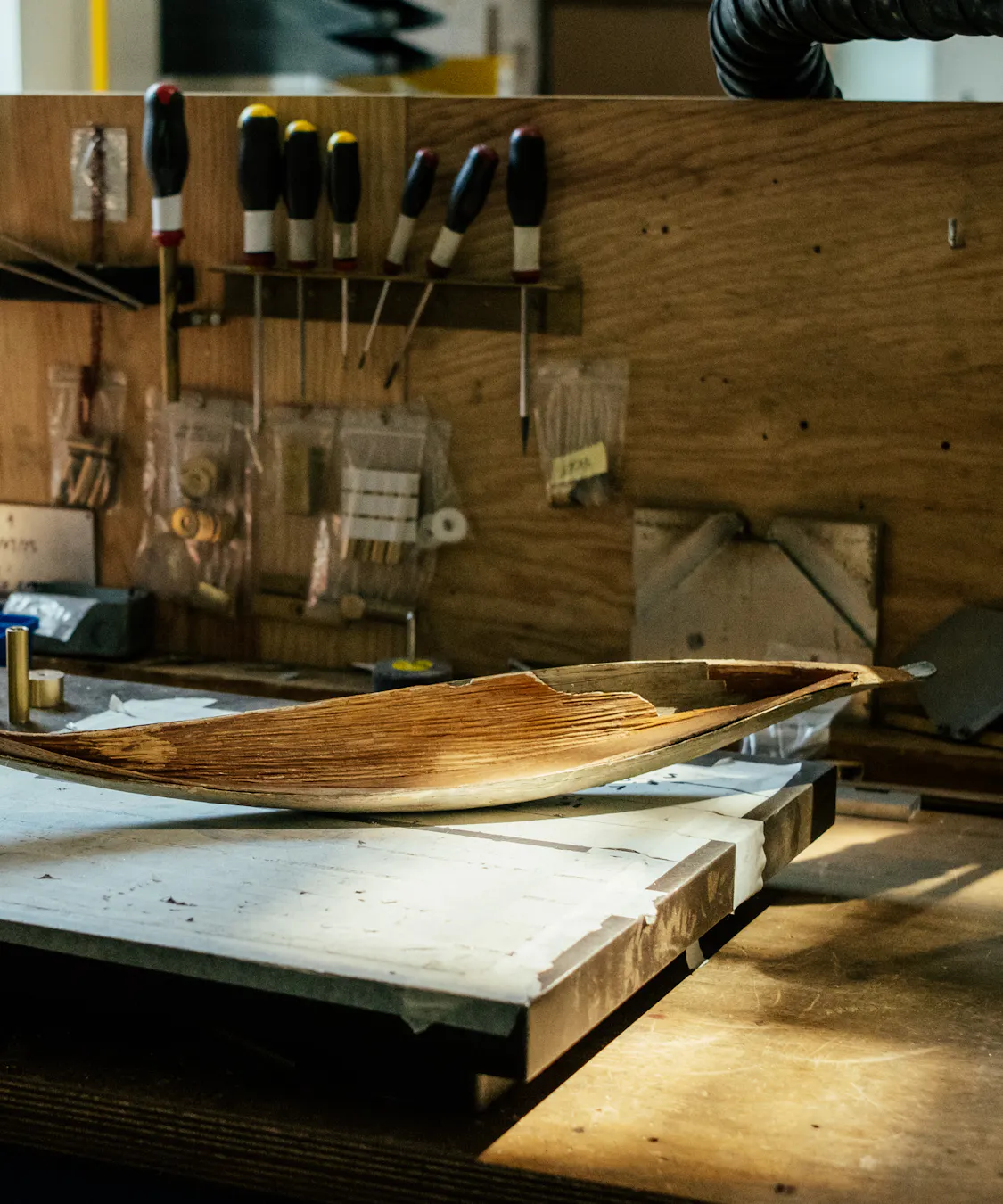
er way of working was as distinctive as the pieces she created. She returned from her many travels with dozens of leaves, roots and flowers. The object shown here, for example, is the spathe of a coconut palm flower she brought back from Guadeloupe; it inspired the Amazone lamp. Wearing a chaser’s smock several sizes too large and drawing constantly on whatever came to hand, she studied plants until she understood their structure, then gave them a second life in bronze. Fifty years on, her pieces remain among the most sought-after in the catalogue.
The Ginkgo, the House Emblem
Of all the plants to have entered the workshop, the ginkgo holds a place of its own. An extraordinary species, it is the sole surviving member of an entire botanical order. It first appeared 270 million years ago, before flowers, bees and dinosaurs, and survived three of the five…
Of all the plants to have entered the workshop, the ginkgo holds a place of its own. An extraordinary species, it is the sole surviving member of an entire botanical order. It first appeared 270 million years ago, before flowers, bees and dinosaurs, and survived three of the five great mass extinctions, including the Permian event that wiped out almost all marine life. In China, some specimens are more than three thousand years old. With no known predators, parasites or diseases, the ginkgo is regarded by botanists as potentially immortal.
It has become an emblem of endurance. Its leaf is unlike that of any other tree: two fan-shaped lobes, crossed by veins that fork from the petiole. In autumn, it turns a vivid yellow and carpets the ground in gold, earning it the French name arbre aux mille écus - the tree of a thousand écus. The first ginkgo planted in Paris, at the Jardin des Plantes in 1795, is still alive.
When Chrystiane Charles cast her first lampe Ginkgo in 1990, she recognised in the tree a reflection of bronze itself: a material that precedes us, outlives us and endures for centuries.

Fruit, Flowers and Leaves
Beyond this emblematic tree, the Charles collection is a vast botanical garden.
There is Ajonc, shown here, alongside Ananas, Pomme de Pin, Épi de Maïs and Lotus, designed by Jean Charles in the late 1950s. There is Fougère, with its young fronds unfurling, and Nénuphar, with its…
Beyond this emblematic tree, the Charles collection is a vast botanical garden.
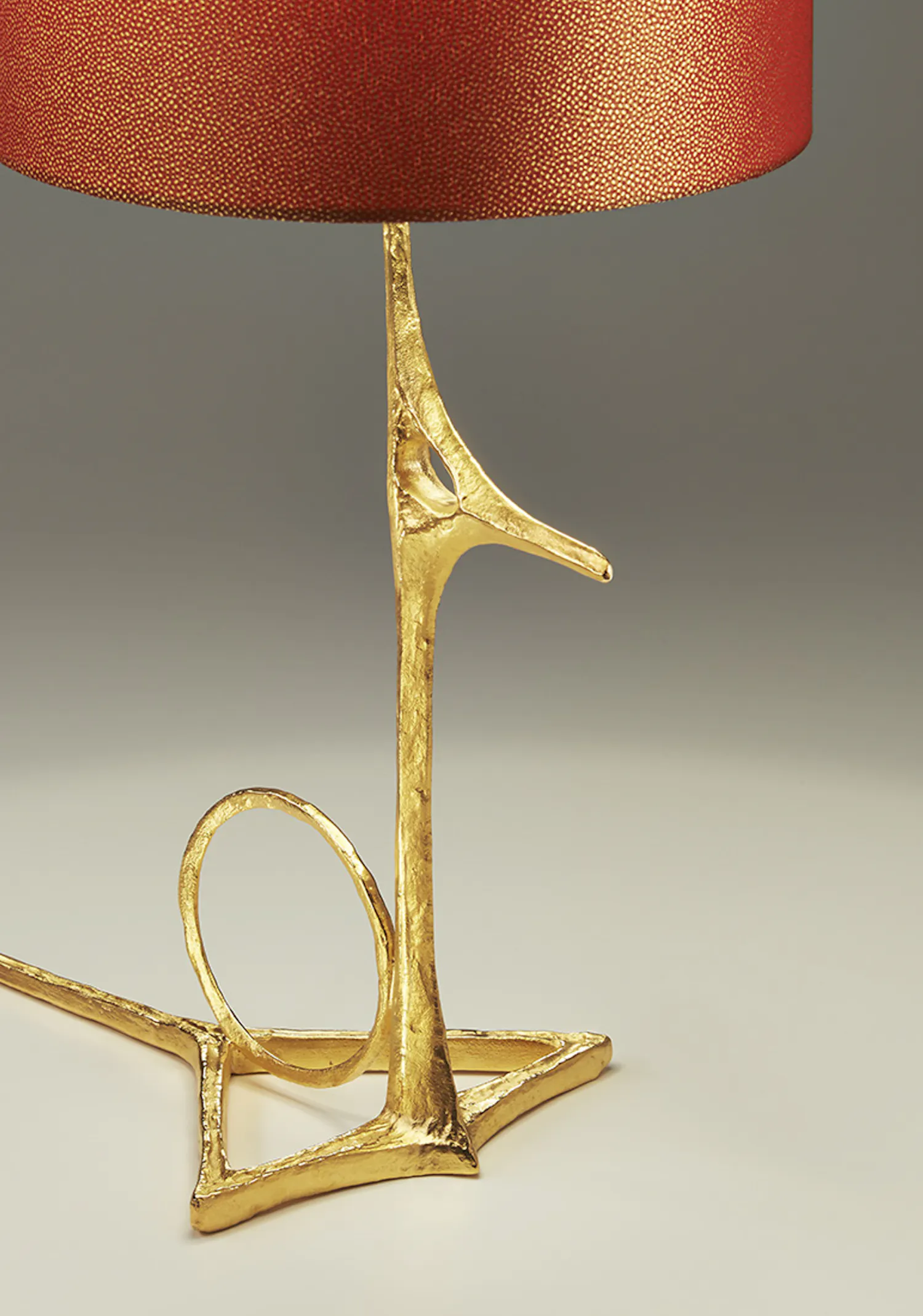
There is Ajonc, shown here, alongside Ananas, Pomme de Pin, Épi de Maïs and Lotus, designed by Jean Charles in the late 1950s. There is Fougère, with its young fronds unfurling, and Nénuphar, with its open corolla; Palmier, which turns the palm frond into a light; Roseaux, Bambou, Agave, Arum and Cactus, by Felix Agostini.
More recently, the collaboration with Uchronia has produced the floral-inspired lamps Cosmos, Groovy and Bloom.
Each piece begins in the same way: with a plant observed long enough for its structure to emerge, then imagined in bronze as it exists in the world, with its own weight, balance and asymmetries.

The Marine World
The maison has another distinct realm, apart from garden and forest: the sea. Corail, designed by Jacques Charles; Nautila, Voile, Cordage, Aigua-Blava, Thalassa, Océanide and Normandy designed as a tribute to the ocean liner of the same name. These forms, drawn from the…
The maison has another distinct realm, apart from garden and forest: the sea. Corail, designed by Jacques Charles; Nautila, Voile, Cordage, Aigua-Blava, Thalassa, Océanide and Normandy designed as a tribute to the ocean liner of the same name. These forms, drawn from the shoreline and the ocean depths, are cast in bronze that grows richer and warmer with age.
These nautical pieces run throughout the maison’s catalogue and find their place in the yachts and seaside residences whose interiors Charles designs.

The maison Charles Bestiary
Charles has also maintained a close relationship with the animal world. Alongside marine life and the antique motifs found in its grand-style lighting, a menagerie has taken shape over the decades. Sculpted with the same attention as the botanical forms around it, it appears in…
Charles has also maintained a close relationship with the animal world. Alongside marine life and the antique motifs found in its grand-style lighting, a menagerie has taken shape over the decades. Sculpted with the same attention as the botanical forms around it, it appears in lamps such as Chouette, Phalène, Papillon...
This bestiary grew when the maison took on Félix Agostini’s estate and secured the exclusive rights to publish his work. His universe is touched by the marvellous: Taureau, Zozio Ducal, Antilope Larchant, Archeoptryx; horses rearing, birds suspended in flight, a swordfish cutting through an invisible current, creatures on the verge of myth. The same can be said of Denise Pietra-Corbara, Agostini’s pupil, and her lamps Canard, Petit Pivert and Grand Pivert.
Their hand is distinct from Chrystiane’s, but they share a subject, and their sensibilities meet. Agostini, too, looked intensely at the living world; he, too, sought to capture it without fixing it in place. Now brought together under the same roof, their bodies of work complement one another.
The Body, the Hand, the Gesture
The human figure also inhabits the Charles collection. Pharaon, Victoire Ailée, Sculpture Femme, Mademoiselle, and Mascarade all take up the motif. With Félix Agostini, it extends into figures emerging from the metal, sculptural and mythological beings such as those in the lamps…
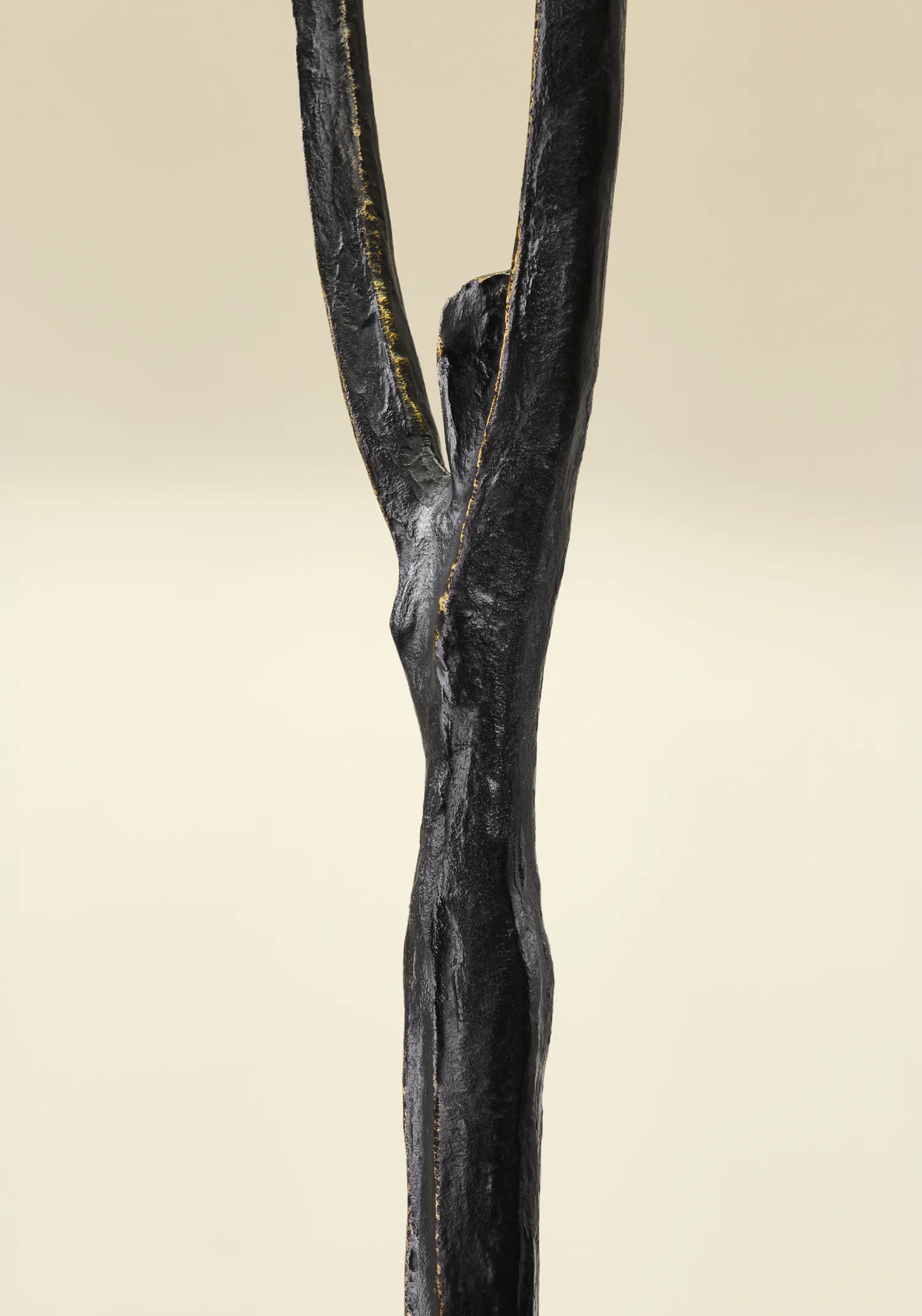
The human figure also inhabits the Charles collection. Pharaon, Victoire Ailée, Sculpture Femme, Mademoiselle, and Mascarade all take up the motif. With Félix Agostini, it extends into figures emerging from the metal, sculptural and mythological beings such as those in the lamps Ariel, Caryatide and Nymphe, a detail of which is shown here.
They belong to a long tradition: from the Greek kouros to Donatello’s David and Rodin’s Penseurs, bronze has been the material of the human figure since antiquity, shaped by the hands of the artisans who work it.
Every lamp in the catalogue bears the mark of the chaser who worked its surface, the patineur who coloured it, the assembler who brought it together. In art bronze, the living world gives rise to an ongoing dialogue between bodies: the one represented and the one that gives it form.
The cabinet of curiosities at the maison Charles continues to grow. To explore it or discuss a creation, our team is at your disposal.